

Foundation for Mature Skin: What to Choose for Aging Skin in Your 50s and 60s
Mature skin carries years of expression and movement. It’s skin shaped by time, and by the moments – the smiles, the concentration, the laughter, and the rest – we’ve cherished.

That’s why the right foundation for mature skin shouldn’t aim to hide those markers, or smooth the face into something unfamiliar. Rather, foundation for mature skin should support the skin as it is now – moving with your facial expressions, adapting to changes in moisture in the air, and maintaining an even finish without weight or stiffness.
Below, we explore how skin evolves through your 50s and 60s, and why lighter, more flexible formulas often perform better. We’ll also walk you through how to identify the best foundation for mature skin from Lancôme, based on how it applies, wears, and moves.
Why should you approach foundation for mature skin differently?
As we age, our skin renewal cycle – the natural process of skin replacing itself – slows. This means dead skin cells remain on the surface for longer, oil levels decrease, and – for many women – menopause can intensify these changes. Together, these changes can alter how foundation applies and wears on your face.
These shifts often show up as:
- Patchy: foundation clings to raised areas, instead of spreading smoothly across the skin.
- Dryness: pigments set too quickly, making your skin feel tight and dry.
- Fine lines and creases: denser formulas crease as the face shifts throughout the day.
- Uneven tone: Sunspots and hyperpigmentation stand out more under heavier coverage.
Next, we explain why foundation for mature skin needs to behave differently – with formulas that respond to how your skin moves and wears now.
Why does your choice of foundation for mature skin matter?
The face is constantly in motion, and every expression influences how makeup wears on mature skin.
For example, matte and powder formulas are designed to set firmly in place. On aging skin, that rigidity can cause foundation to break at points of movement, making fine lines and wrinkles easier to see as the day goes on.
As our Beauty Director Lara Srokowski explains, “I usually recommend liquid or cream foundations for mature skin because they move naturally on the surface. For everyday wear, serum foundations and skin tints can work well when a lighter finish feels right.”
Not sure how this translates on your own skin? Try our virtual makeup try-on to see which foundation textures suit your complexion.
What to look for in a foundation for aging skin in your 50s, 60s, and beyond
_resized.jpg?sw=1910&sh=1910&sm=cut&q=70)
Foundations for mature skin that wear well often borrow from the same principles as skincare for mature skin, with ingredients that help formulas spread evenly and adapt to the natural changes of your skin.
The best foundations for aging skin often include ingredients such as:
- Hyaluronic acid pulls moisture into the skin, preventing dryness so foundation doesn’t cling or settle into creases.
- Glycerin , which slows moisture loss, helping foundation maintain flexibility throughout the day – rather than tightening as it sets.
- Niacinamide, which supports a more balanced skin tone, and reduces reliance on heavy corrective coverage.
- Vitamin E, which helps protect both the formula and the skin from environmental stressors that can compromise wear and finish.
Lancôme’s best foundations for mature skin

Below are our best foundations for mature skin. These formulas are designed to deliver coverage without heaviness, and support an even, natural-looking finish – making them some of the best foundations for aging skin in your 50s and 60s.
Teint Idole Ultra Wear Care & Glow Foundation
Teint Idole Ultra Wear Care & Glow Foundation is designed to hold coverage in place without locking it down. The fluid texture glides across the skin, then settles into a finish that continues to adapt as the face moves.
The benefits of hyaluronic acid help prevent the surface from drying out during wear, while mandelic acid reduces buildup that can cause foundation to catch or appear patchy. This enables you to build coverage where tone needs support, and lighter where you need it less.

Teint Miracle Foundation
Teint Miracle Foundation evens the complexion with light-to-medium coverage, making it a reliable foundation for mature skin when a natural finish is the goal.
Formulated with glycerin, the fluid texture spreads easily and draws moisture to the surface, so it feels like bare skin once applied. Yet, while you won’t feel the coverage through the day, you will see it in the mirror – as a smooth, radiant look and a glowing skin finish.
Absolue The Fluid Foundation
Absolue The Fluid Foundation is designed for skin that benefits from added nourishment during wear. The lightweight, fluid texture spreads thinly across the skin, delivering uniform coverage without collecting in lines or areas of texture.
This balance of skincare and pigment makes Absolue The Fluid Foundation one of our best foundations for mature skin over 60, particularly when maintaining a smooth surface is more important to you than achieving high coverage. The finish sits between satin and silk, with a texture that melts straight into the skin.

Skin Idôle 3 Serum Supertint
Skin Idôle 3 Serum Supertint delivers sheer, adjustable coverage through a lightweight, serum-style texture. It balances the complexion without covering your complexion’s natural warmth, so skin still looks like skin.
With a formula that sits closer to skincare than a traditional foundation, it pairs niacinamide and hyaluronic acid to keep the skin looking hydrated – so pigment applies evenly, instead of catching on dry areas. Vitamin E helps protect the formula from breaking down on the skin, so coverage stays smooth and consistent.
How to apply foundation for mature skin: 7 expert techniques
You’ve chosen your foundation – but the right application is just as important.
Small adjustments can significantly improve wear and finish. So, when applying foundation for mature skin, always:
-
Understand your skin type before you apply, noting where skin feels drier, oilier, or more textured so you can adjust product amount and placement.
-
Start with hydrated skin, which helps foundation spread evenly and prevents pigments from catching on dry areas.
-
Prepare your skin with primer, focusing on areas where texture is most noticeable: such as around the nose, mouth, or forehead.
-
Warm the foundation on the back of your hand before applying to improve control and distribution.
-
Use thin layers, building coverage only where it’s needed to avoid product pooling in expression lines.
-
Apply concealer only where tone needs extra support, such as under the eyes, around the nose, or over dark spots, rather than applying it across the entire face.
-
Set with a setting spray instead of powder, which helps maintain flexibility and reduces the risk of dryness showing through.
We’ve covered what makes the best foundation for aging skin – now look beneath it. Next, discover the best anti-aging serums designed to support skin before makeup is applied.
Shop the selection
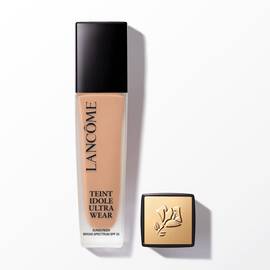

Teint Idole Ultra Wear Foundation
24H LONGWEAR LIQUID FOUNDATION FOR A FLAWLESS, ULTRA LIGHTWEIGHT, MATTE FINISH
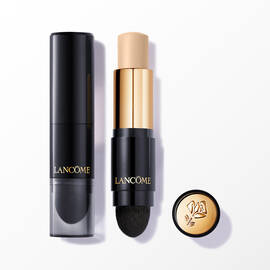
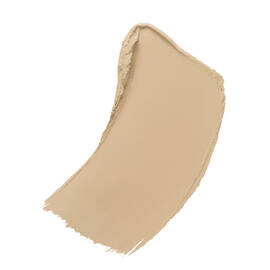
Teint Idole Ultra Wear Foundation Stick
FULL COVERAGE, 24H, LIGHTWEIGHT FORMULA, MATTE FINISH
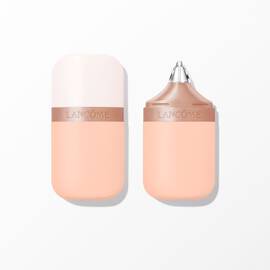
Skin Idôle 3 Serum Supertint
ULTRA-LIGHTWEIGHT TINTED SERUM FOR UP TO 24H GLOW & WEAR*