

Retinol and Niacinamide: How to Use These Ingredients Together in Your Skincare Routine
If you’re tapped into the world of skincare, you’re probably familiar with retinol and niacinamide: two efficacious ingredients known for their ability to refine skin texture and tone. Individually, they offer several impressive benefits – but how do they fare together?
Like with any fusion of ingredients, you’ll need to consider how retinol and niacinamide will layer together – and if they complement each other. In this guide, we’ll take you through the merits of using retinol and niacinamide together for your visible and textural skin concerns, and how to incorporate this synergistic duo into your skincare ritual.

What does retinol do?
Retinol is a vitamin A derivative that has the capacity to stimulate skin cell turnover and collagen synthesis. As a result, there are many retinol benefits for your skin, including:
- Improving skin elasticity and tightening your facial skin
- Unifying and brightening skin tone
- Smoothing the appearance of textural concerns like fine lines and wrinkles
- Regulating sebum production and controlling breakouts
- Targeting hyperpigmentation concerns like dark spots and post-blemish marks
These qualities make retinol one of the most powerful anti-aging and anti-blemish ingredients in skincare. However, even with its proven efficacy, retinol is also known to make the skin more prone to sun damage, dryness, and increased sensitivity.

What does niacinamide do?
A form of vitamin B3, niacinamide is one of those multi-tasking ingredients that might have already made an appearance in your skincare routine.
Here are some of the notable benefits of niacinamide for skin:
- It’s a potent antioxidant that helps neutralise free radicals
- Supports the skin moisture barrier
- Minimises the look of enlarged pores
- Helps reduce redness on the skin
- Like retinol, niacinamide also targets the appearance of hyperpigmentation
Niacinamide is generally compatible with all skin types. It also plays well with most skincare ingredients – making it perfect for layering.
Can you use retinol and niacinamide together?
Yes, you can use retinol and niacinamide together – they’re actually quite a harmonious pair.
Alone, retinol tends to dry out the skin, but niacinamide can help fortify the skin moisture barrier – thereby promoting moisture retention. As a result, niacinamide can help mitigate some of the harsher side effects associated with retinol purging : such as dryness, redness, and increased sensitivity. However, like with any retinol pairing, care should be taken when layering these ingredients to avoid skin discomfort.
What are the benefits of using niacinamide and retinol together?
In addition to supporting the skin moisture barrier through retinol usage, there are plenty of combined benefits of using niacinamide and retinol together – especially if you have aging- or blemish-related skin concerns. Together, this pair can help:
- Even out skin tone and fade hyperpigmentation marks
- Shrink the appearance of enlarged pores and control overactive sebaceous glands
- Refine skin texture like fine lines and blemishes
- Promote skin elasticity; retinol stimulates collagen production, while niacinamide helps prevent oxidative stress (a major factor in the breakdown of collagen reserves)
Retinol and niacinamide order – which comes first?
The correct retinol and niacinamide order is to apply retinol first and follow with niacinamide. When it comes to layering serums in skincare, you can follow the general rule of applying by ‘thinnest to thickest’.
Retinol should always be applied to clean, dry skin. So, once you have washed your face with your cleanser, ensure that your skin is fully dry before applying retinol. If you’re using a niacinamide serum, that can be applied after retinol – but before your moisturiser.
How to use retinol and niacinamide in your skincare routine
To help you harness the combined effects of retinol and niacinamide, we’ve consulted the advice of Lancôme’s National Skincare Expert Brittany Hanchard:
“When using retinol and niacinamide together, it’s important to cushion both ingredients with nourishing products. This means starting with a gentle cleanser that’s right for your skin type, then applying your serums, then finishing with a moisturiser to seal in hydration. You might also consider using a niacinamide-rich moisturiser to visibly correct tone and texture while hydrating the skin.”
Below, we have formulated a sample skincare routine for you.
- Wash your face with a suitable cleanser: Cleanse your skin using a face cleanser that’s formulated for your skin type. For instance, use a cream cleanser for dry skin, and a clarifying foaming cleanser for oily skin.
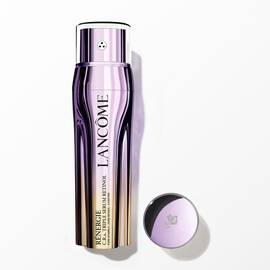
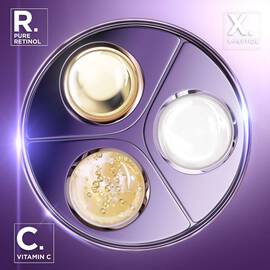
- Apply retinol serum to fully dry skin (PM only): After cleansing, ensure that your skin is fully dry before applying retinol. Then, apply a thin layer of Rénergie C.R.X. Triple Serum Retinol and allow the product to fully absorb into the skin.
- Use your niacinamide-based serum: Dispense two pumps of the Rénergie H.C.F. Triple Serum into your hands, then mix. Apply onto your face and neck, using outwards and upwards motions.
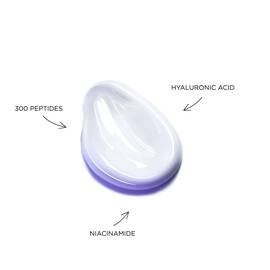
- Hydrate with a moisturiser: Apply the Rénergie H.P.N 300-Peptide Cream onto your face and neck to nourish the skin. This moisturiser is formulated with a blend of niacinamide, hyaluronic acid, and 300 peptides to visibility improve the look and feel of skin.
- Apply sunscreen (AM only): Retinol will make the skin more photosensitive, so it’s important to apply sunscreen every morning at the end of your regime – ideally, at least 20 minutes before sun exposure.
Once you have successfully combined retinol and niacinamide in your skincare routine, discover how to use retinol and vitamin C for their anti-aging and brightening benefits.
Shop the selection
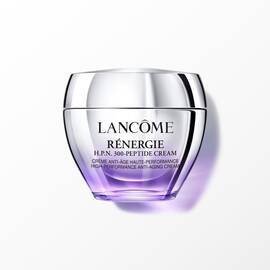
Rénergie H.P.N 300-Peptide Cream
VISIBLY REGENERATE SKIN FASTER, EVEN AS YOU AGE¹. This advanced peptide moisturiser combines over 300 peptides with hyaluronic acid & niacinamide to visibly lift, firm and smooth skin.
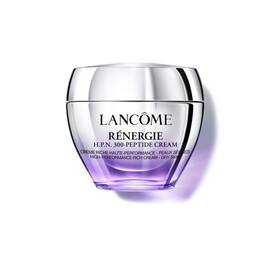
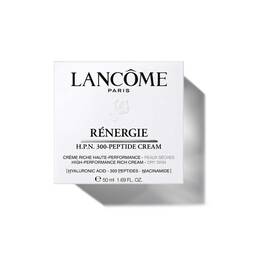
Rénergie H.P.N. 300-Peptide Rich Cream
HYALURONIC ACID - 300 PEPTIDES - NIACINAMIDE HIGH-PERFORMANCE RICH CREAM FOR DRY SKIN


